I thought Canada was cold. And then I moved to England

By Barry Rueger
Published: Globe and Mail
December 18, 2025
980 words

EDF Smart Meter

A few weeks ago, we began our Christmas season with the Advent Procession service at Great St. Mary’s in Cambridge. Like all older stone-built churches in Europe, St. Mary’s has no heating system. Despite our scarves and heavy winter coats we were shivering by the time that the choir and organist had finished, and even Rev. Clare Stephenson, who led the service, and offered us her blessing as we left, had the look of someone who was very ready for a warm fire and a glass of Christmas cheer.

The British are a proud people. They are justifiably proud of their history, still dwell on their memories of empire, can celebrate literary icons like Chaucer and Shakespeare, and more recently still have vestiges of waning pride in their rejection of Europe during Brexit. But more than all of that, the British find their greatest pride in being cold.

Before moving to Cambridge, where my wife Susan is studying for her Master of Philosophy in Musicology, I had of course heard the jokes about slippers and cardigans, and about the British obsession with not spending money on heat. What I now know is that these weren’t jokes – they were the very foundations of a national culture.

We’re renting one of the Charterhouse terraced cottages in the village of Grantchester, on the outskirts of Cambridge. It’s a lovely home, built around 1880, with a great landlord, and the 250-year-old Blue Ball Inn just two doors down. That pub turns out to be a very good thing because when our home is too cold to stay in, the pub always has a roaring blaze in the fireplace. The downside is that our bills for cask ale and pork pies are approaching what we pay for electricity.

We have a Smart Meter from EDF, our electricity company. Minute by minute a little light is either green (good), amber (caution), or red – you’re using too much power! The screen shows us exactly, to the penny, how much we’ve spent on energy as each day progresses. During the cold snap in November that daily number crossed £10. Our Canadian minds quickly translated £300 a month to $550 Canadian dollars!

What I’ve learned since arriving in Britain is that yes, everyone wears layers of clothing indoors, and that yes, likely only one room in the house is heated at any time. Old houses are drafty, and the heating systems are unlike anything I experienced in Canada. Our cottage has “storage heaters,” which take advantage of half-price overnight electricity rates (charging double the rate we paid in Vancouver) to heat large, heavy ceramic blocks inside of a radiator. In the morning when electricity prices jump (to triple Vancouver rates!) that stored heat is allowed to escape and heat the room. At least until around dinner time, when the stored heat has run out.

As I sit on the sofa, reading, with my feet curled up under me keep them warm, or while we snuggle under a duvet while watching the BBC, I’m reminded of our home in Canada. Homes there have big gas or oil-fired furnaces, double glazed windows, and (oh how I miss it) under-floor heating. I remember being able to walk from room to room and stay warm no matter where I went. I look back fondly on turning up a thermostat without a moment’s hesitation, making everything just a little bit warmer because, really, it costs so little.

Like a lot of Canadians, we’ve spent many evenings watching programs like The Crown and Downton Abbey. In both series the most memorable set pieces show people deep in discussion beside a roaring fireplace. What I now realize is that 10 feet away from the hearth people were likely shivering frigidly. Even the wealthy and powerful in Britain live half the year in the cold.

Because the heating systems in British homes are so spartan, almost every single room in the house – including the bathroom – has a small, plugged in, electric heater to “take the edge off” the cold. These inefficient little boxes do warm things up a bit, but are an expensive solution.

Although their homes and apartments may be cold, the British people are genuinely warm and helpful. When we’ve complained about being chilly, they’ve been quick to suggest solutions.

“Layer the floor; even newspapers under a rug stop the cold coming up.” “Eat something warm and calorie-dense before bed to keep core temperature steady.” “Cafés with poor ventilation tend to be warmest; linger.”

And my favourite: “A small pet is effectively a mobile heat source. Cats are the most efficient, but anything warm-blooded helps.”

Which is not to say that the British couldn’t also improve their insulation, and add weather-stripping to doors, and price their electricity a little bit more for comfort than profit.

Of course, when I look back fondly on our toasty, warm Canadian homes, I can’t help but think about how they were heated. In B.C. you might be able to use the power from hydro-electric dams, and in Ontario from nuclear power plants, but more likely your furnace still burns natural gas, or in Atlantic Canada, heating oil. We were warm all winter in our Nova Scotia farmhouse, but the oil heating is one small part of the global warming that led to this year’s Maritime drought.

The other morning, I came down for coffee and breakfast. I stepped into a freezing kitchen and found Susan warming her hands over the toaster. “Seriously,” she said, “I feel like Hans Christian Andersen’s ‘Little Match Girl’, scrabbling for whatever scrap of warmth I can find.”

I smiled at that image – until I took the time to read the story that I vaguely remembered from childhood. The Little Match Girl was found frozen to death.
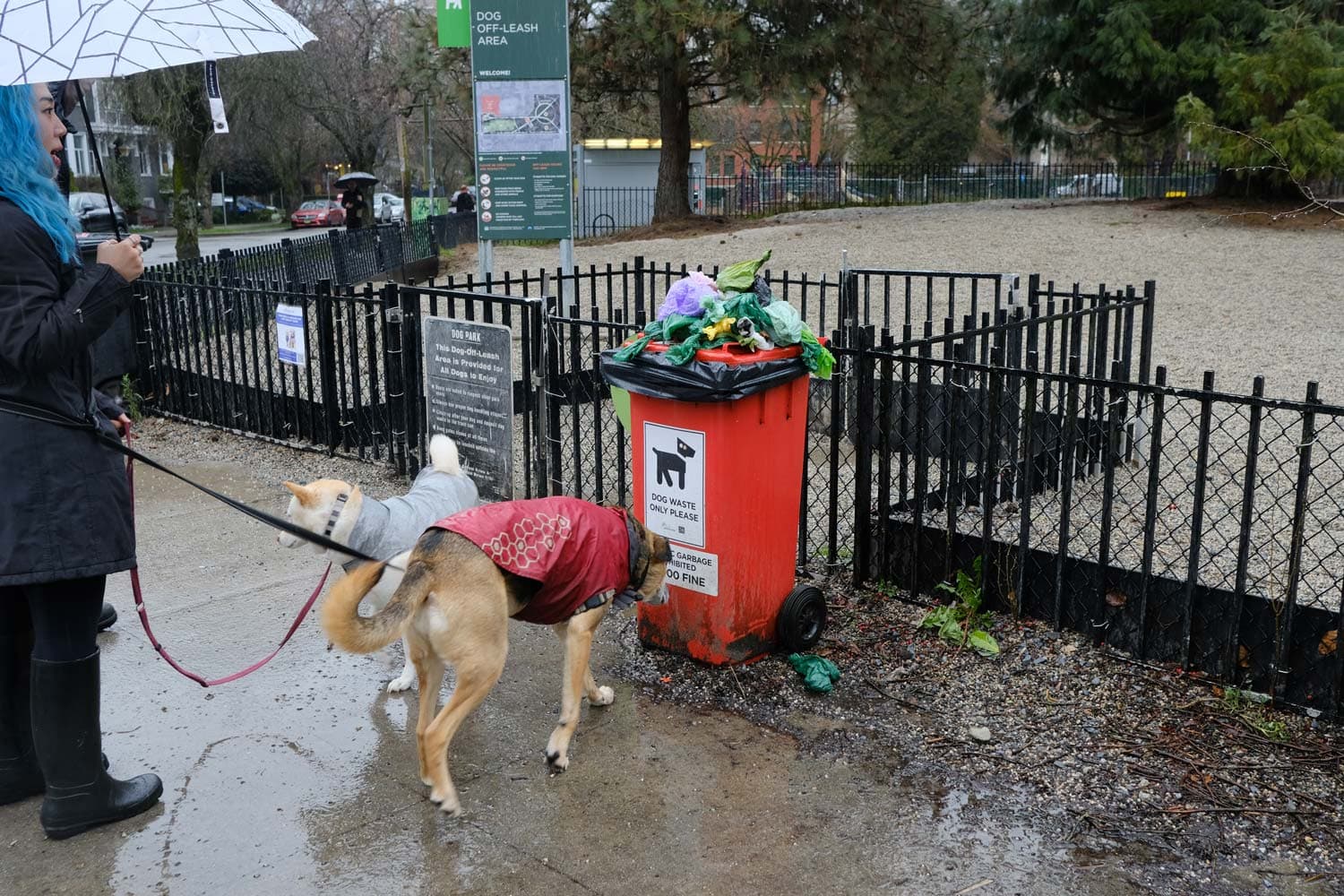
Is Your Dog’s Poop Bag Really Eco-friendly?

By Barry Rueger
Published: Asparagus Magazine
April 4, 2025
1483 words
Read on-line.

The story of compostable dog-poop bags is complicated—as is the story of dog-poop disposal in general.

According to some accounts, the idea of a small bag that could be used to pick up dog poop dates back to 1986, when Californian businessman Chris Crosson created the first dog-poop bag. Another claim dates it to the early 20th century, when Teddy Roosevelt got tired of cleaning up his dog’s droppings and instead would carry a pocket-sized bag for that purpose.

Regardless of who had the idea first, over the past 100 years it has been almost universally accepted that every dog owner should collect their pet’s waste. More controversial is the question of how that waste should be disposed of.

Dog waste carries diseases, so you want to keep it away from food, gardens, and waterways. Disease experts such as the US Centers for Disease Control and Prevention say that dog feces can spread pathogens ranging from Campylobacter, Giardia, and E. coli, to hookworm and roundworm.

Even setting aside the disease problems, piles of dog poop on sidewalks and lawns are unpleasant, smell bad, and ick up your shoes when, inevitably, you step in them. Grabbing poop with a little plastic bag and tying the top shut seems like a simple solution—unless you’re trying to do it sustainably.
What’s your bag?

What’s your bag?

If you walk into any pet store, you’ll see shelves full of poop bags of different brands and colours—most of them manufactured in China, but some in the US or Canada. Many of them will claim to be “compostable.” The problem is how you define that term.

The group that certifies most products as “compostable” in North America is the Biodegradable Products Institute (BPI). They have tested thousands of products and allow manufacturers to use the BPI certification mark to demonstrate that what they’re selling can, in fact, be composted.

The problem for Canadian dog owners is that Canadian and American rules are different. BPI explained to Asparagus in an email that “Pet Waste Bags aren’t currently accepted by most commercial composters in the United States, so BPI Certification for Pet Waste Bags is limited to Canada, where those types of products are commonly accepted by curbside composting programs.” This means that dozens of brands of poop bags that wouldn’t be approved in the US can be labelled as “compostable” in Canada.

Generally speaking, “compostable” plastics such as poop bags are made mainly of polybutylene adipate terephthalate, or PBAT. This polymer is synthesized from fossil fuels, though research suggests it could be derived from biomass in future. It is combined with plastic-alternative materials such as polylactic acid (PLA)—typically made from fermented plant starch obtained from plants like corn, cassava, sugarcane, or potato—to toughen them up while retaining the promised biodegradability.

The issue is, although PLA is considered to be compostable in precisely controlled industrial conditions, it is not compostable in home composts or landfills. One 2012 study suggests that in a landfill setting, it could take 100-plus years for PLA to complete the chemical process needed to just start biodegrading.

That problem seems to exist for most “compostable” plastics. Although they will usually degrade, sometimes in only a few years, the degradation relies on the plastic being disposed of under just the right conditions. The moisture of the compost environment, the temperature, and even the size of chopped-up particles that the bags have been reduced to all affect the composting process.

There are currently no international standards or guidelines for home-composting conditions, but companies from many countries—including some from Canada—use the Austrian “OK compost HOME” certification, which defines polymers as home-compostable if at least 90% are degraded within 12 months at ambient temperatures of 20–30°C.

Another issue is the release of microplastics from “compostable” plastics. While research is still being carried out on this, one 2021 study of PBAT in an aquatic environment found that PBAT released “a much larger quantity of plastic fragments/particles” than did LDPE, the plastic commonly used for food wraps, grocery bags, and industrial packaging.

All of this may explain why, as of 2023, BC has stopped allowing items labelled “compostable plastic” to be put in any compost. The Government of BC webpage on the issue states, “[T]hese plastics are regularly removed from composting and recycling facilities and are sent to landfills.”

Disposal dilemma

So you’ve picked up poop in a bag that is more-or-less compostable. Now what do you do with it? As is often the case with waste disposal, the challenge is that you’re trying to dispose of two different materials that need different handling. And you’re trying to do that within the specific rules and procedures put in place by your local municipality.

The starting point with dog waste is your local municipality’s recommendations. A 2019 City of Vancouver Engineering Services memorandum examining its dedicated dog-waste disposal regime (namely, the red bins located in dog parks) cites a report saying that the city has between 32,000 and 56,000 dogs. At the US Environmental Protection Agency’s estimated average of ⅓ kg of waste per dog per day, that comes to between approximately 4,000 and 7,000 metric tonnes of poop heading to local landfills every year.

Although few Vancouver dog-owners know it, the City of Vancouver launched a pilot program in 2016 mentioning the option of emptying your dog poop into your toilet, so that it can be handled by the local waste-treatment system. Your empty poop bags can then go into your household trash can.

The reason for flushing is simple, according to Dr. Love-Ese Chile, a bioplastics researcher: when dog feces go to landfill, they don’t properly compost.

“Dog waste often contains a lot of moisture,” Chile explains. “In the non-oxygen environments in many landfills, it will degrade in an anaerobic way to form methane and water.” That methane ends up being released as a greenhouse gas, which adds to climate problems.

Every plastic poop bag has to be opened and emptied out by hand to separate the bag from the waste.

However, confusingly for dog-owners, the signs at most Vancouver dog parks only remind owners that they are responsible for picking up after their dogs, and even the parks participating in the pilot project make no mention of flushing dog waste.

A 2019 memo to Vancouver City Council regarding the City’s red bins for dog waste raised some significant issues, not the least of which is that every plastic poop bag has to be opened and emptied out by hand to separate the bag from the waste. After some processing, the waste goes to the local sewage-treatment plant, and the bags—compostable or not—to the landfill. Perhaps unsurprisingly, a 2023 follow-up memo on this process notes that the City’s call for companies interested in carrying out the poop-bag-emptying process “received no feasible responses…from anybody willing or capable of dealing with this volume of waste.”

Municipalities are still working on creating good systems for handling dog feces, with little consistency from one place to another. As a dog owner, you might do better to check the resources at the Enviro Pet Waste Network. Their aim is to provide easy-to-understand, science-based information for pet owners.

The scoop on the poop

So as a dog owner, what should I be doing? If I flush the dog poop down the toilet, I’m reducing landfill waste as much as possible. If the bags are “compostable,” even better. Aside from microplastics, the “compostable” plastic bags are still greener than plastic bags made entirely from petroleum products.

What I can’t do, though, is mix my dog waste, or my compostable poop bags, with my regular compost pile. Anything containing animal waste should be kept separate from our food gardens, and that includes compost.

One option that the City of Vancouver suggests is that you create a separate compost pit just for dog feces. Detailed instructions can be found at cityfarmer.org—but before you dig a 3-foot-deep hole in the back of your garden plot, take the time to read through dog-owners’ experiences on Reddit or in gardening forums. For everyone who loves their handy dog-waste compost pit, there’s also someone who finds it unwieldy, smelly, or just not effective as a way to compost poop.

Although it’s possible to successfully compost poop, the reality is that it’s not the same as tossing your potato peels in the compost bucket. You’ll need grass cuttings or other plant material—and probably septic-tank starter—to get things working, and your success will depend on the specifics of your soil, climate conditions, and your dog’s breed, size, and diet.

Regardless of how you dispose of the actual dog poop, every dog-owner has to judge for themselves whether a little plastic bag is as green as they want to be. If not, maybe a wooden spoon and an old yogurt container is a better choice.


Shopping for a Greener Home in France

By Barry Rueger and Susan Evans
Published: Asparagus Magazine (PDF Scan)
September 2022
1622 words

It’s been almost 10 months since we arrived in France with hopes of settling here for life. Sometimes it seems incomprehensible that we could have blithely sold up and closed down everything we had going on in Canada, and set off with two suitcases and a cat on a plane to a new life in a new country on a new continent—all taken on trust, sight unseen.

There have been waves of regret and tsunamis of self-doubt, but one thing remains constant: in almost every way, we love this new country of ours, and are resolved to take the time necessary to build a secure sense of belonging, the one missing piece of the puzzle.

For the most part, we feel, France is getting “it” right, culturally, socially, and politically. The French government assumes a position of social, national, and global responsibility that we aren’t used to, coming from a country where ecological tragedy can be brushed aside in favour of preserving a few more years of profit from oil, gas, and coal.

Yes, we all know about the mountains of paperwork and forms to fill out before anything moves forward in France. But move forward it does, logically and steadily, if maddeningly slowly. And it’s all worth it in the end, because we reap the benefits of belonging to a system that’s “doing it right.”

From the moment we arrived here—despite all the difficulties of language and not knowing a soul here—we felt supported. Moving through different government departments, we encountered a rational, thoughtful, unrushed way of doing things, and received help from government staff every step of the way.

We soon began the process of purchasing a house in Alençon—a small municipality in Normandy, about 200 km southwest of Paris—and found ourselves navigating a universe of carefully planned regulations and funding programs aimed at making French homes warmer, greener, and more comfortable. And it is heartening that these programs are designed specifically to benefit average working people, and not just well-heeled home renovators.

When looking at heating choices in Canada, our Vancouver homeowner brains were wondering: “If we can’t use gas for heating and hot water, what’s left? And if it’s electricity, isn’t it expensive? And how about the ecological and environmental costs of generating electric power?”

In France there are many more central-heating-system options than are commonly available to Canadian home-owners. Examples include heat pumps, condensing boilers, wood-pellet or “biomass” burners, and solar-powered heating. Many are more eco-friendly than gas or oil, and more economical to run. But what makes them even more attractive are the generous government subsidies that can cover up to 100% of the costs of upgrading.

In Canada we tend to focus on automobile emissions and power generation as key areas to reduce carbon emissions. But according to a 2020 European Commission report, “Buildings are particularly energy-intensive, accounting alone for almost 45% of final energy consumption and 25% of greenhouse-gas emissions in France… [And] 7 million dwellings are poorly insulated and almost 4 million households struggle to pay their bills or deprive themselves of heating.”

From the beginning of July 2022, homeowners in France were prohibited from installing a new oil-fired furnace, and owners of new homes were prohibited from installing gas heating. The government of France declared that new installations of equipment for heating buildings or water must fall below a conservative greenhouse gas emission ceiling. Meaning you won’t be allowed to install an oil, gas, or coal-fired heating appliance except in exceptional circumstances.

The house of our dreams was a big 18th-century mansion with many floors, many rooms, fireplaces, and a lovely setting in the middle of Alençon. It was a two-minute walk from the historic round Halle au Blé, from our favourite sidewalk bistro, and from a great boulangerie (bakery). Lovely though it was, we faced the challenges common to owning houses built two or three centuries earlier: as well as the expected renovation of wooden floors and 300-year-old walls and ceilings, we would be facing bills for heating and energy-use very near the top of the chart.

Those gigantic fuel bills, and our general concern for reducing our own contributions to climate warming, made it obvious that we would have to spend many thousands of euros to bring the house up to something approaching 21st-century energy efficiency. We eventually decided against purchasing this house, but first we had a chance to explore what that process might look like.

In France, home buyers are very well protected. They’re given a wealth of information about the house that they hope to buy, and everyone involved takes the concept of vices cachés (“hidden defects”) very seriously. These can include everything from structural issues, to neighbouring development projects, to troublesome neighbours. And work done on the house, whether by a professional or a well-meaning do-it-yourselfer, is subject to a 10-year period of warranty called une garantie décennale.

In Canada, when you purchase a house you’ll sign a sales contract that might run five to 10 pages long. If you’re lucky, there may be a home inspection report as well, but it’s often a case of “buyer beware.” In France, you’ll be reading and initialling every page of a document well in excess of 100 pages, and sometimes much more than that.

As well as telling you everything you don’t want to know about the structure, the roof, and the presence of asbestos or lead paints, it will outline in detail how energy efficient the house is. It is government-mandated that you be told where your heating efficiency lies on a scale from an excellent A to a very sorry G, and how many CO2 emissions your home will generate over a year, also measured on a scale from A to G. Every real estate listing also includes the charts showing these ratings.

Fortunately, the French government also is very generous in helping homeowners improve both of these numbers. Depending on the project, the government will pay up to 100% of the costs of an upgrade, but the specific amounts depend on several factors. First, household income, and the number of people in residence. Unlike in Canada—where equivalent funding programs only look at how much is being spent—the funding available is much greater for homeowners with less income. Second, the extent of the improvement provided by the upgrade: Will your efficiency move from the bottom-most F or G levels to something in the middle, or will you reach the topmost A or B levels?

All of this work begins at the MaPrimeRénov website where homeowners can apply for funding to replace old heating systems, insulate their homes, and replace aging windows with new triple-glazed ones. There is also funding available for solar and geothermal heating, and for other ventilation improvements. The funding process is complex, but if you’re a homeowner, it’s too generous to ignore.

One of the biggest expenses we looked at would be a new furnace. The quote for that was approximately €20,000 (about US$20,000).  If we had purchased the house, we could have received significant financial assistance for a more sustainable form of heating. As well as exchanging the old furnace for a new heat-pump, pellet-burning, or geothermal unit, we also could have applied for funding to cover some or all of the other improvements listed above. We’re advised that we would have saved at least 60% of our household fuel bills.
To be funded, all of this work has to be completed by a professional installer: do-it-yourself tinkerers need not apply. And landlords must promise that the home will remain a tenant’s principal residence for at least five years after the work is finished—an Airbnb property won’t get the subsidy.

There are also programs to offer zero-interest bank loans to homeowners doing energy improvement work, through a program called éco-PTZ. Works that can be paid for with these loans include: roof, wall, window, and door insulation, and installation of renewable-powered heating. One of the benefits of taking out an éco-PTZ  loan is that there is no requirement to demonstrate income levels to support it. You must simply be the property owner.

From this September, anyone who wants to sell a property that is ranked in the F or G categories will also need to pay for an audit énergétique—a far more precise measure that aims to inform future buyers not only of their likely energy bills—but also of the cost of renovations needed to make the property fall into the B class. And in July, the new laws made it illegal for landlords to increase the rent of properties with ratings of F or G, and illegal to rent them out full-stop from 2025.

Living in North Vancouver, we were always made to feel guilty for the less-than-ideal environmental choices we’d made. Even when alternatives weren’t offered, were beyond our means, were untenable because of our age or situation, or, at best, were incredibly difficult and time-consuming to achieve. In France, it feels like the powers that be are truly helping citizens change their habits and lower their impacts.

When we finally find our new house in France, multiple financial incentives will make it much easier for us to renovate or replace inefficient heating systems, poor insulation, or draughty windows. The French government uses financial aid as a carrot incentive to encourage us to improve our home’s energy efficiency. There is no punitive stick of guilt or financial loss if we don’t have the means to pay. What our new government understands is that we won’t solve the climate crisis by only handing money to corporations. It’s often a much better investment to help individuals and families to make their houses green.